
Key takeaways
- Chefchaouen sits high in the Rif Mountains, and its blue-washed medina is small enough to cross on foot in well under an hour.
- The Spanish Mosque viewpoint is the single best sunset spot, reached by a short uphill walk from the old town.
- Akchour, a short drive away, offers waterfall hikes ranging from an easy stroll to a half-day trek.
- There is no train to Chefchaouen; most travelers arrive by bus, shared taxi, or private transfer from Tangier or Fes.
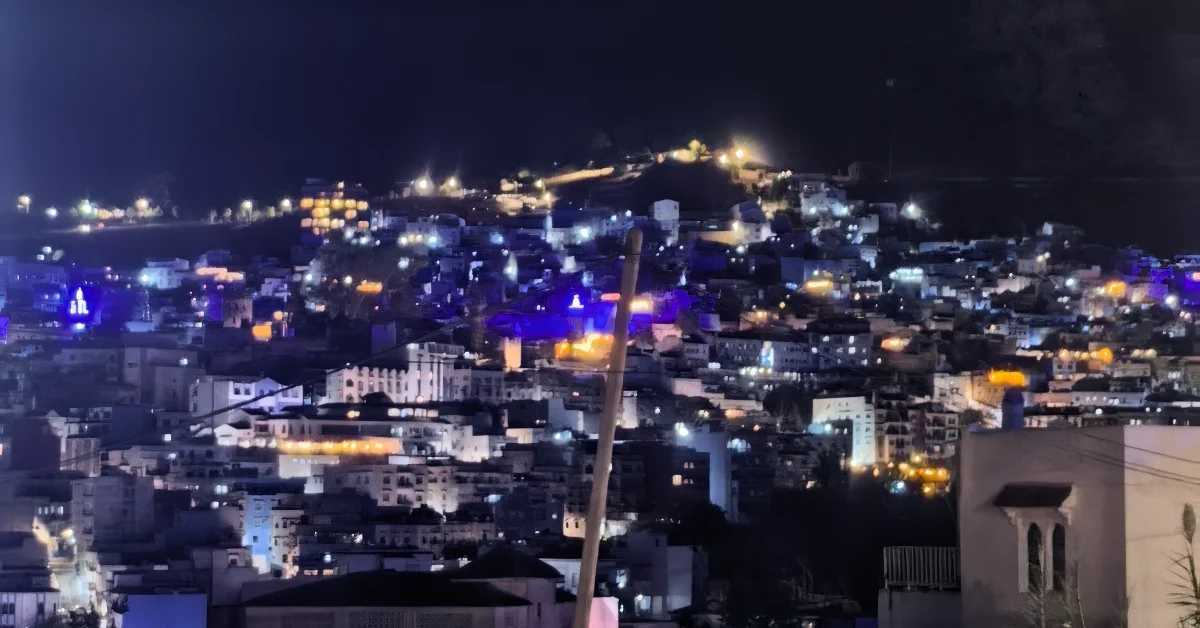
Chefchaouen is a small mountain town in northern Morocco famous for its blue-painted old town, and the best way to experience it is slowly, on foot, with a camera and no fixed schedule. This Chefchaouen blue city guide covers what to see, where to walk, which day hikes are worth the effort, where to eat, and how to get there from Tangier or Fes.
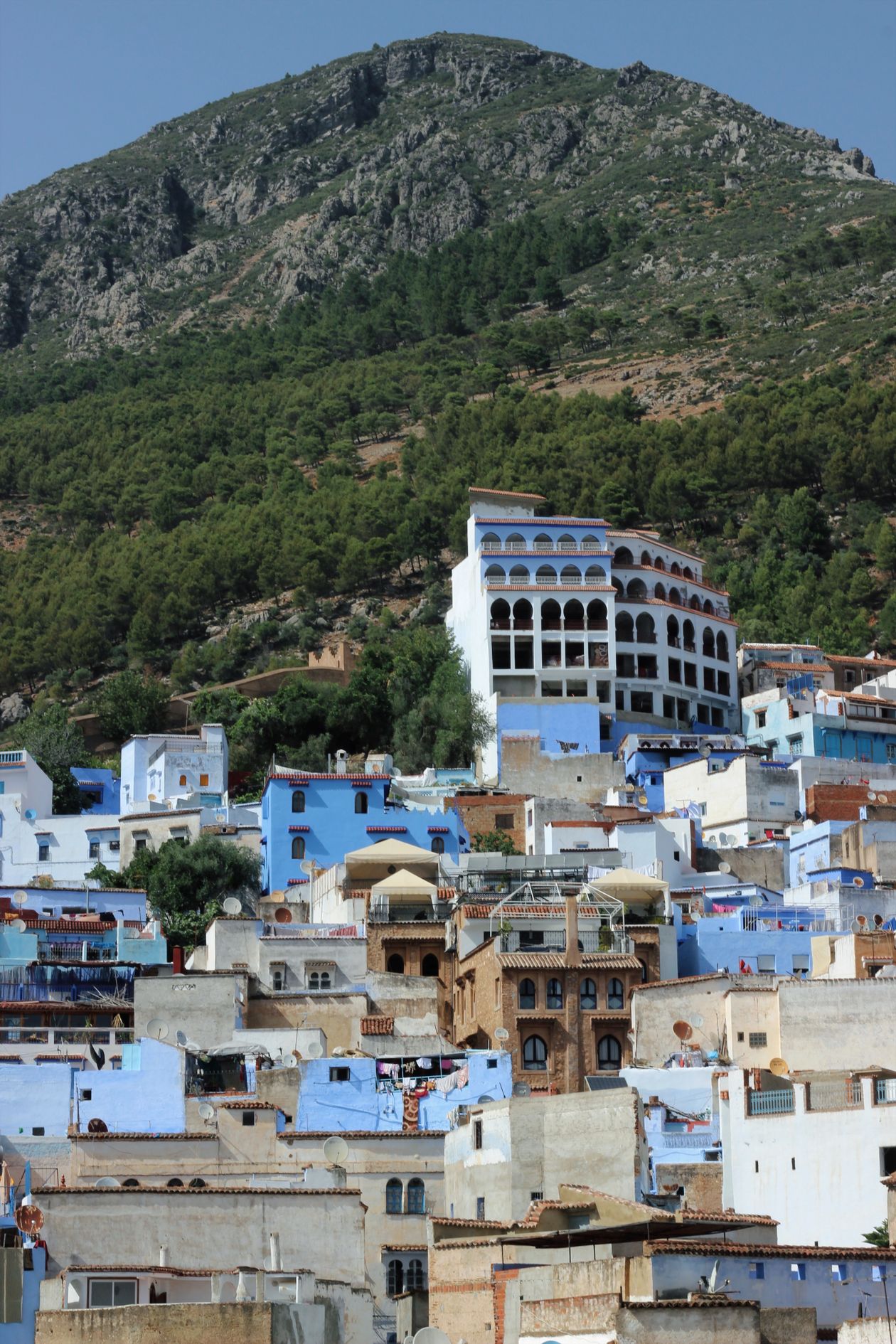
Set high in the Rif Mountains, Chefchaouen feels cooler, calmer, and more compact than Morocco's big imperial cities. You can wander the entire medina in a morning, yet most travelers find a reason to stay longer.
Why the blue medina leads any Chefchaouen blue city guide
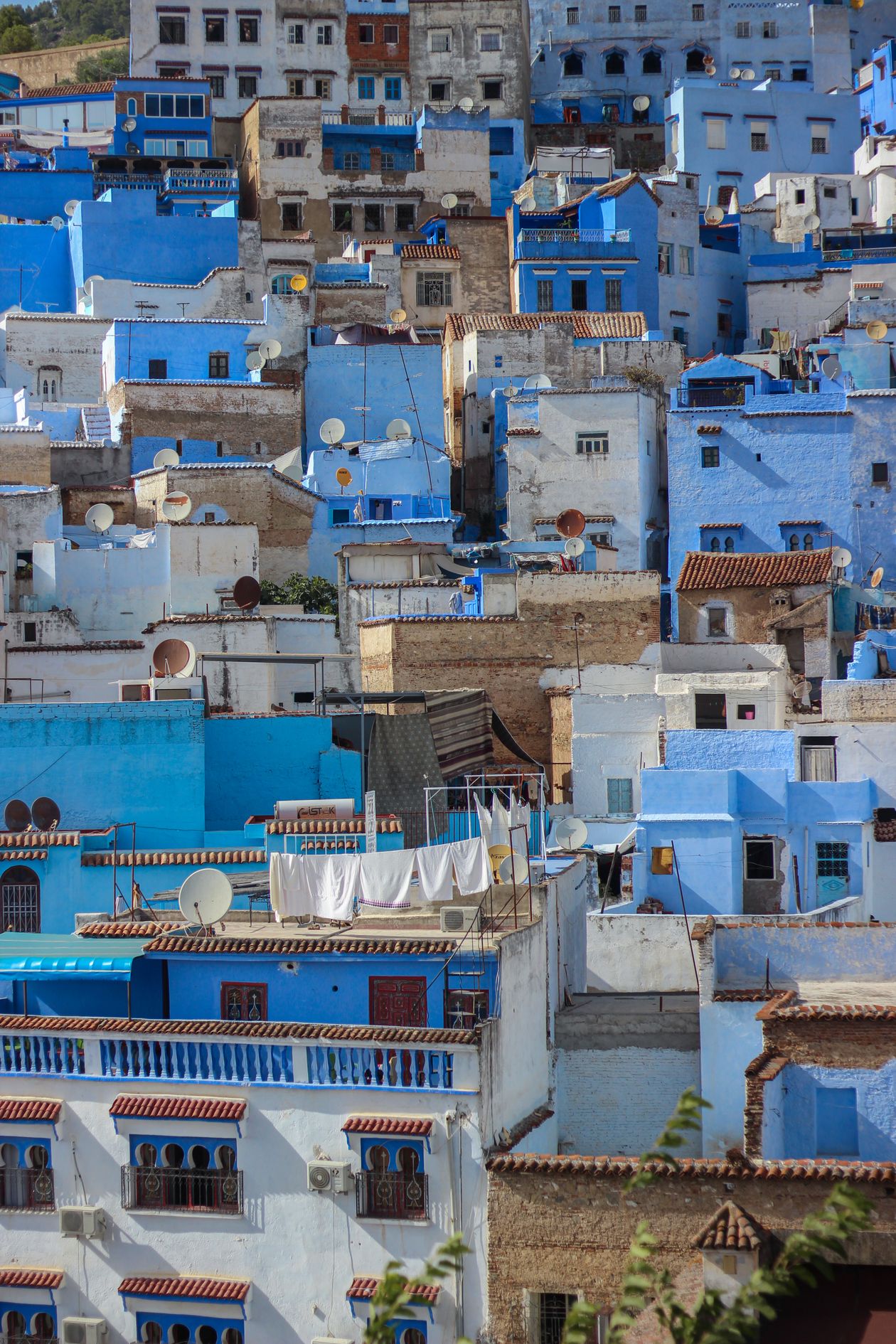
The appeal is simple: almost every wall, step, and doorway in the old town is washed in shades of blue, from pale sky to deep indigo. Walking through it feels like moving inside a painting, and the color shifts constantly as the light changes through the day.
Chefchaouen was founded in 1471 as a small fortress, according to WorldAtlas, and the medina still follows the tight, winding layout of that era. Over the centuries the town took in Andalusian Muslims and Jewish families leaving Spain, and that mixed heritage shows in the architecture and the crafts.
No one agrees on exactly why the town turned blue. One account traces the practice to Jewish residents, for whom blue carried spiritual meaning tied to the sky and the heavens. Another, more practical story holds that the color helps keep insects away. Whatever the reason, the effect today is unmistakable and draws visitors from around the world.
Top photo spots and walking routes through the old town
The medina is best treated as one long photo walk rather than a checklist. Still, a few spots reward you reliably, and a loose route keeps you from circling the same alleys.
Start at Plaza Uta el-Hammam, the main square, then let the lanes pull you uphill toward the quieter residential streets where the blues get richer and the crowds thin out.
Reliable photo stops include:
- The staircase alleys near Rue Bin Souaki, where potted plants and painted steps stack up in layers.
- Doorways and keyhole arches throughout the upper medina, each framed in a slightly different blue.
- The Kasbah and square, where ochre stone contrasts with the surrounding blue walls.
- Ras El Maa, a small waterfall at the edge of the medina where locals gather and the lanes open to mountain views.
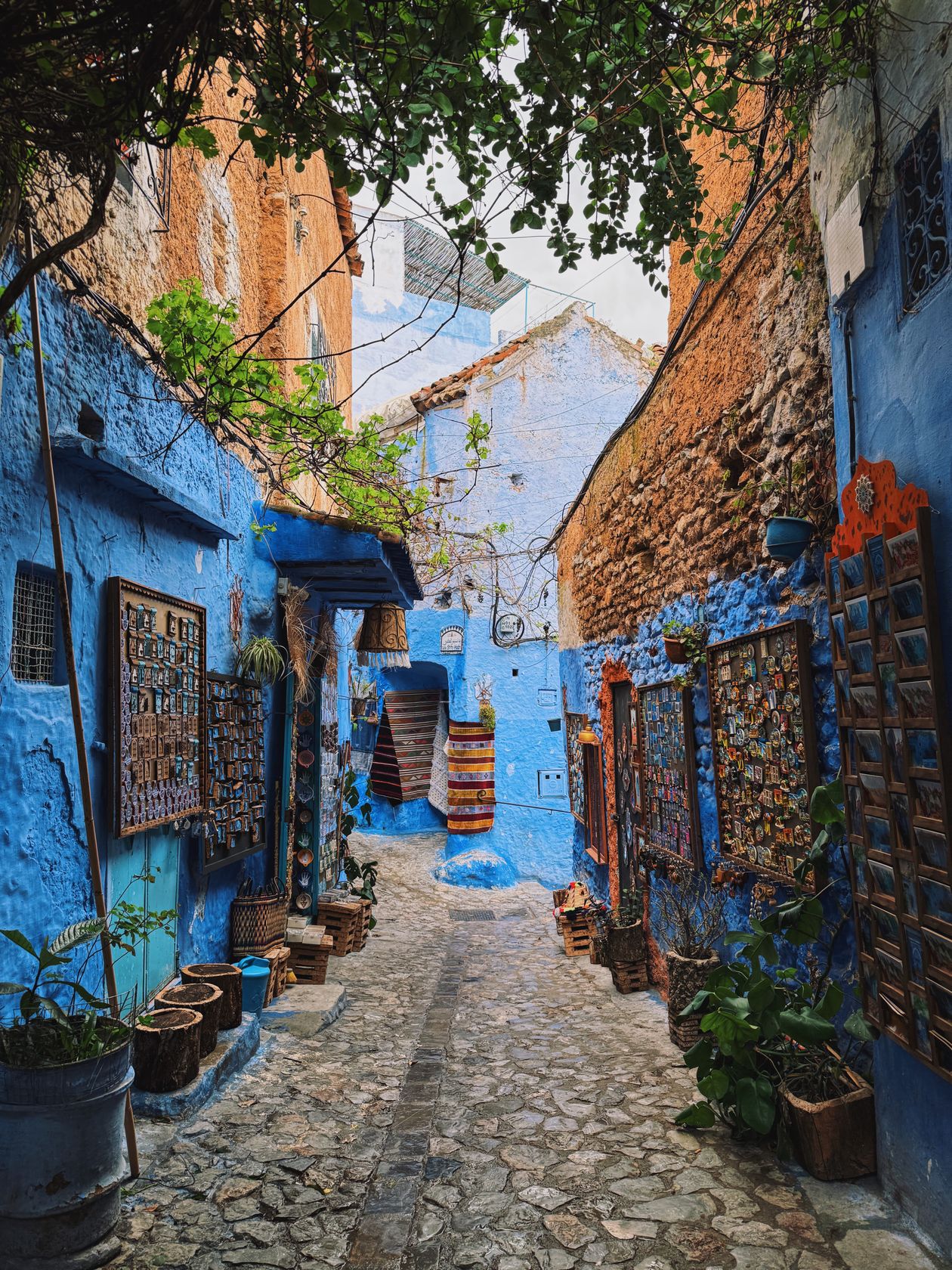
For the softest light and the fewest people, walk the medina soon after sunrise. By mid-morning the day-trip buses arrive and the narrow lanes fill quickly. A good habit is to photograph early, rest through the busy midday hours, and head out again in the late afternoon.
A practical note: residents live and work here. Ask before photographing people, skip doorways marked private, and keep your voice down in the quieter lanes.
Best day hikes: the Spanish Mosque and Akchour waterfalls
Two walks stand out, and together they fill a full and varied day of trekking around Chefchaouen. One is short and close; the other is a half-day excursion into the mountains.
The Spanish Mosque viewpoint
The Spanish Mosque sits on a hillside directly across from the medina and offers the classic postcard view of the blue town below. The walk up is short, taking most people well under an hour on a clear path that climbs steadily from the eastern edge of the old town near Ras El Maa.
It is the town's favorite sunset spot, so aim to arrive about an hour before the sun drops. Bring water, wear decent shoes for the rocky sections, and carry a small light for the walk back down, because the path is not lit after dark.
Akchour waterfalls
For something longer, head to Akchour, a mountain valley a short drive from Chefchaouen reached most easily by shared or private taxi. The trail follows a river past a series of pools and cascades.
You can choose your distance:
- The lower waterfall is an easy out-and-back suitable for most fitness levels and families.
- The Grand Cascade, the larger waterfall deeper in the valley, is a longer and more demanding trek that takes most of the day once transport is included.
- God's Bridge, a natural rock arch over the river, makes a shorter alternative in the same area.
Spring and autumn are the most comfortable seasons for the Akchour hike, with milder temperatures and reliable water flow. Pack food and water, since options along the trail are limited to a few seasonal cafes.
Where to eat and shop for local crafts
Food in Chefchaouen leans toward hearty mountain cooking. Expect tagines, bean stews, and fresh goat cheese, a local specialty you will see stacked in the markets. The main square and its surrounding terraces are the easy, atmospheric choice for a sit-down meal with a view of the crowds.
For better value and more local flavor, step a few streets back from the square, where small family-run spots serve the same dishes at gentler prices. Mint tea is the standard finish to any meal.
On the crafts side, Chefchaouen is known for:
- Wool goods, including blankets and woven items made in the surrounding Rif villages.
- Leather slippers and bags, often more relaxed in price than in the larger cities.
- Natural dyes and soaps, sold loose in the medina shops.
Prices are negotiable in most shops, so a polite back-and-forth is expected. Shopkeepers here tend to be less pushy than in Fes or Marrakech, which makes browsing more pleasant.
How to reach Chefchaouen from Tangier and Fes
Chefchaouen has no airport and no train station, so every visitor arrives by road. The two most common starting points are Tangier to the north and Fes to the south, both well connected to the national rail and bus network described by the Moroccan National Tourist Office.
From Tangier, the drive is the shorter of the two, taking roughly two hours through the Rif foothills. This makes Tangier the usual gateway for travelers arriving by air or ferry from Spain. Public buses, shared grand taxis, and private transfers all run this route regularly.
From Fes, the journey is longer, generally around four hours on winding mountain roads. Many visitors treat Chefchaouen as a stop between Fes and the north coast rather than a quick side trip.
Your main options are:
- Public bus: The most economical choice, with scheduled departures from both cities to the Chefchaouen bus station just outside the medina.
- Shared grand taxi: Faster than the bus and reasonably priced, though it leaves when full.
- Private transfer or guided tour: The most flexible option, letting you stop for photos and set your own pace.
If Chefchaouen is one leg of a larger Morocco trip, it pairs naturally with a longer guided itinerary that links the north with the desert and imperial cities. Operators such as Ibra Travel Tours run multi-day grand tours that can fold Chefchaouen into a wider loop, which saves you from arranging each transfer yourself. Travelers heading south afterward often continue toward the Sahara on a trip like this 4 day desert tour from Marrakech.
To get the most out of the town, plan at least one overnight. Book a guesthouse inside the medina, walk the blue lanes at first light, and end your day at the Spanish Mosque as the sun sets over the Rif. That simple rhythm, quiet morning and golden evening, is what turns a quick stop into the highlight of a northern Morocco trip.
Frequently asked questions
Why are the buildings in Chefchaouen painted blue?
Several explanations circulate, including a Jewish tradition linking blue to the sky and the divine, and a practical belief that the color repels insects. The exact origin is still debated.
How do I get to Chefchaouen from Tangier?
Tangier is the closest major gateway. You can travel by public bus, shared grand taxi, or private transfer, with the drive taking roughly two hours through the Rif foothills.
Is one day enough for Chefchaouen?
You can see the main medina in a day, but staying overnight lets you catch quiet mornings and a Spanish Mosque sunset, which most visitors consider the highlight.
Is Chefchaouen worth visiting?
Yes. The blue medina, mountain setting, and nearby waterfall hikes make it one of the most distinctive stops in northern Morocco, especially for photographers and walkers.