
Key takeaways
- A 4 days desert tour from Marrakech crosses the High Atlas to Ait Ben Haddou, Dades Valley, Todra Gorge, and the Erg Chebbi dunes at Merzouga.
- Expect two long driving days and one full day in the dunes, with a sunset camel trek and an overnight in a desert camp.
- Private tours cost more but let you set the pace; shared groups of 6 to 16 people are the budget-friendly option.
- March to May and September to November bring the most comfortable temperatures for the Sahara.
- Pack layers: desert days are warm while nights near the dunes can turn cold, even below freezing in winter.
A 4 days desert tour from Marrakech takes you across the High Atlas Mountains to the Sahara at Merzouga, with a night in the Erg Chebbi dunes at its heart. Over four days you cover the famous southern route: the fortified village of Ait Ben Haddou, the red cliffs of the Dades Valley, the narrow walls of Todra Gorge, and a sunset camel trek into the dunes.
This guide walks through the itinerary day by day, explains what is included, compares private and shared options, and covers the best seasons to go. By the end you will know exactly what the trip involves and how to book one.
Day-by-Day: The 4 Days Desert Tour From Marrakech
The classic route runs Marrakech to Merzouga and back, built around two driving days, one full desert day, and a return. Here is how each day usually unfolds.
Day 1: Marrakech to the Dades Valley
You leave Marrakech in the morning and climb the Tizi n'Tichka pass, the main road crossing of the High Atlas and the highest paved pass in the country. The first major stop is Ait Ben Haddou, a striking earthen village of clustered kasbahs on an old caravan route between the Sahara and Marrakech.
After a guided walk through its lanes, you pass through Ouarzazate. Often called the gateway to the desert, the town is home to Morocco's film studios. From there it is a short drive on to the Dades Valley, where you spend the first night in a local hotel or riad.
Day 2: Dades Valley to Merzouga and the Dunes
The second day is the longest and the most scenic. You explore the rock formations of the Dades Gorge, then drive to Todra Gorge, a dramatic canyon whose walls rise as high as 400 meters, narrowing to a passage about 10 meters wide at its tightest point, according to Wikipedia's entry on the Todgha Gorge.
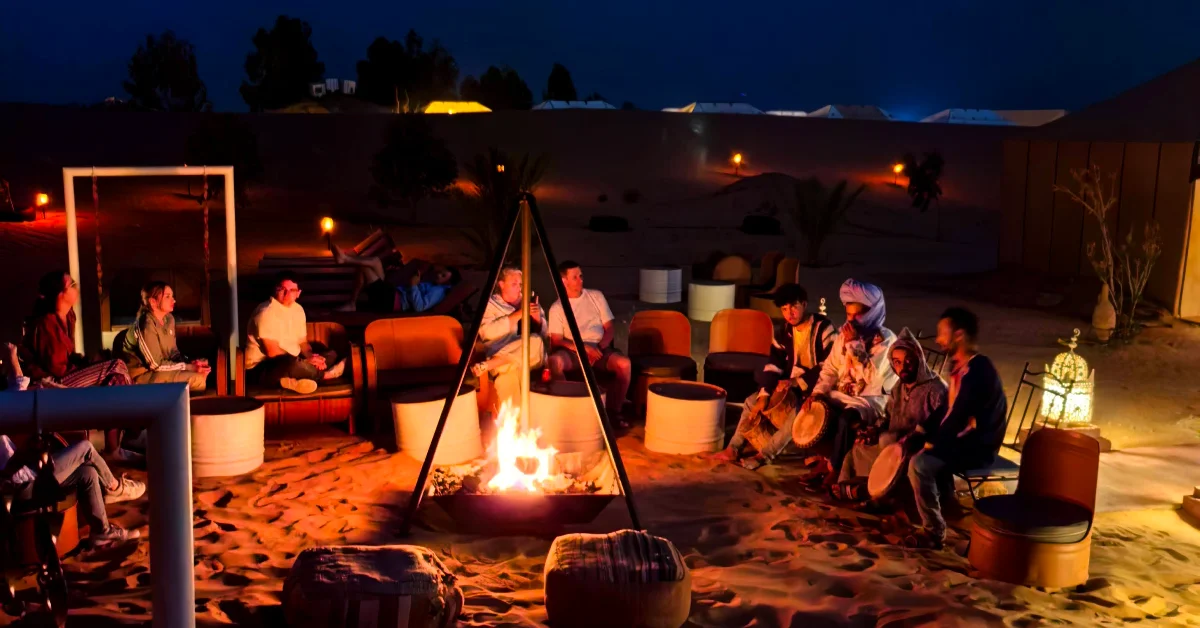
From there the road runs east through Tinghir and Erfoud to Merzouga, where the Erg Chebbi dunes begin. In the late afternoon you meet your camels and ride into the sand to reach a desert camp, arriving in time for sunset over the crests.
Day 3: Sunrise in the Sahara, Then West
You wake early for sunrise from a high dune, one of the quietest and most memorable moments of the trip. After breakfast, a short camel trek brings you back to Merzouga, where your vehicle is waiting.
The rest of the day is spent driving west, often retracing part of the southern route or taking a variation through Rissani and the Draa Valley, with an overnight near Ouarzazate.
Day 4: Ouarzazate Back to Marrakech
The final day is a return drive. Many tours offer an optional morning stop at the Atlas Film Studios or a second look at Ait Ben Haddou before climbing back over the Tizi n'Tichka pass. You typically arrive in Marrakech in the late afternoon.
The Highlights You Will See
Four stops carry most of the trip, and each one is worth knowing about before you arrive.
Ait Ben Haddou
Ait Ben Haddou is a fortified village of rammed-earth kasbahs that has been a UNESCO World Heritage Site since 1987, listed for its traditional pre-Saharan architecture, per the UNESCO World Heritage Centre. Its honey-colored towers have appeared in many films, which is why it feels familiar even on a first visit.
Dades Valley
The Dades Valley is known for its rose-tinted rock, palm groves, and the twisting switchback road that climbs out of the gorge. It makes a restful first-night base after the mountain drive.
Todra Gorge
Todra Gorge is one of the deepest and narrowest canyons in Morocco. Walking its floor, with sheer walls towering overhead and a clear river at your feet, gives a strong sense of scale before you reach the open desert.
Erg Chebbi
Erg Chebbi is a sea of wind-sculpted dunes that reach heights of up to about 150 meters and stretch roughly 28 kilometers from north to south, according to Wikipedia's entry on Erg Chebbi. This is where the camel trek and the desert camp take place, and where the Sahara finally feels boundless.
What Is Included
A 4 days desert tour from Marrakech is usually sold as a package. Knowing what the price covers helps you compare quotes fairly.
Most reputable operators, including Ibra Travel Tours, include the following as standard:
- Private or shared transport in an air-conditioned vehicle with an experienced driver
- All overnight stays: hotels or riads on the road nights and a desert camp at Erg Chebbi
- A sunset and sunrise camel trek into the dunes
- Dinner and breakfast at the camp, plus breakfast at road hotels
What is often not included, and worth confirming before you book:
- Lunches and drinks along the route
- Entrance fees to some monuments
- A local guide inside Ait Ben Haddou
- Tips for your driver and camp staff
Ask any operator for a written list so there are no surprises when the bill arrives.
Private vs Shared Group Tours
The biggest choice you will make is private versus shared, and it shapes both the price and the feel of the trip.
A private tour means the vehicle, driver, and schedule are yours alone. You can stop for photos when you like, adjust the pace, and travel as a couple, family, or small group of friends. It costs more per person, but it suits travelers who value flexibility and privacy.
A shared group tour pools you with other travelers, usually in groups of 6 to 16 people. It is the budget-friendly choice. It can be sociable too, though stops and departure times are fixed for everyone.
Which one fits depends on how you travel. Many couples and families lean toward a private tour for the comfort, while solo travelers and backpackers often prefer the lower price of a shared departure.
Best Seasons and What to Pack
Timing matters more in the Sahara than almost anywhere else in Morocco, because the temperature swing between day and night is large.
The most comfortable windows are spring, from March to May, and autumn, from September to November, when daytime temperatures generally sit between 20 and 30 degrees Celsius. Summer, from June through August, brings extreme heat in the desert and is best avoided unless you tolerate it well. Winter days are pleasant, but nights near the dunes can fall close to or below freezing.
Pack with the swing in mind:
- Layers you can add and remove, including a warm top for the camp evening
- A scarf or light head covering for sun and blowing sand
- Sunscreen, sunglasses, and a hat
- Comfortable closed shoes for walking in gorges and on dunes
- A small day bag, since your main luggage stays in the vehicle during the camel trek
Before you travel, it is worth checking your own government's current entry requirements and travel advice for Morocco.
How to Book With Ibra Travel Tours
Ibra Travel Tours runs multi-day guided desert and grand tours of Morocco, with departures from Fes, Marrakech, Casablanca, and Tangier, so a 4-day Marrakech to Merzouga route is squarely within what the company does. To book, decide first whether you want a private or shared departure and which dates suit the seasons above.
The clearest next step is to send Ibra Travel Tours your travel dates, group size, and private-or-shared preference through the website, then ask for a written inclusions list and a pickup time for your Marrakech hotel. With those details confirmed, your Sahara trip is set, and all that is left is to pack your layers and head for the dunes.
Frequently asked questions
How long does it take to drive from Marrakech to Merzouga?
The full route from Marrakech to Merzouga runs roughly 550 to 600 km and takes two driving days on a 4-day tour, with stops at Ait Ben Haddou, the Dades Valley, and Todra Gorge along the way.
Is 4 days enough for a Marrakech desert tour?
Yes. Four days is the most popular length because it gives you time for the main landmarks and a full night in the Erg Chebbi dunes without rushing. Shorter trips skip the Sahara overnight or cut the gorges.
What is the best time of year for a Sahara tour from Marrakech?
March to May and September to November offer mild temperatures, usually 20 to 30 degrees Celsius. Summer brings extreme desert heat, and winter nights near the dunes can drop toward freezing.
Do I sleep in the desert on a 4-day tour?
Yes. The standard itinerary includes one night in a desert camp among the Erg Chebbi dunes, reached by camel at sunset, with dinner, music, and a sunrise view the next morning.
Can I do the tour privately instead of in a group?
Yes. Most operators, including Ibra Travel Tours, offer both private tours with your own vehicle and driver and shared group departures that lower the per-person price.